Buy ecovignet.eu ?
We are moving the project
ecovignet.eu .
Are you interested in purchasing the domain
ecovignet.eu ?
domain@kv-gmbh.de · 0541-91531010
Buy ecovignet.eu ?
What is the difference between organic and eco-friendly products?
Organic products are made from ingredients that are grown without the use of synthetic pesticides, herbicides, or fertilizers, and are often certified by a regulatory body. Eco-friendly products, on the other hand, are designed to have minimal impact on the environment throughout their entire lifecycle, from production to disposal. While organic products focus on the natural ingredients used, eco-friendly products consider the overall environmental impact of the product. In essence, organic products focus on the ingredients, while eco-friendly products focus on the entire product lifecycle. **
Is organic sustainable?
Organic farming practices can be more sustainable than conventional methods in terms of reducing chemical inputs, promoting biodiversity, and improving soil health. However, there are challenges to the scalability and efficiency of organic farming, which can impact its overall sustainability. For example, organic farming typically requires more land and labor to produce the same amount of food as conventional methods, which can limit its ability to meet global food demand. Additionally, the transportation and distribution of organic products can have a higher environmental impact due to their shorter shelf life and the need for refrigeration. Overall, while organic farming has many sustainable benefits, there are also limitations to its long-term sustainability on a large scale. **


Similar search terms for Velocity
Top-Angebote
Products related to Velocity:
-
Velocity Pro Gear Velocity Rogue 20XL Service Bag - Ranger GreenVelocity Rogue 20XL Service Bag – Ranger Green You've been waiting for a bigger, better upgrade to the Velocity 2.0 Service Bag - and this is it. The Rogue 20XL in Ranger Green is one serious upgrade. It packs 37 internal and external pockets - yes, that's a lot of pockets - plus three embedded magnets which are a total game-changer. Need to hold some screws or fixings? These magnets will keep them right where you need them. You wont need a separate tray or even a pot. Throw in a removable tool panel with four pockets and you can have frequently used tools right at your fingertips without having to dig through the main bag all the time. And good news, the whole bag is waterproof with a 3.2mm base and M10 YKK zippers which are rated for heavy daily use - its built to last. If you're familiar with the Velocity 2.0 Service Bag, the 20XL is pretty much167,00 £*Shipping: 0,00 £Secure redirect to the provider
-
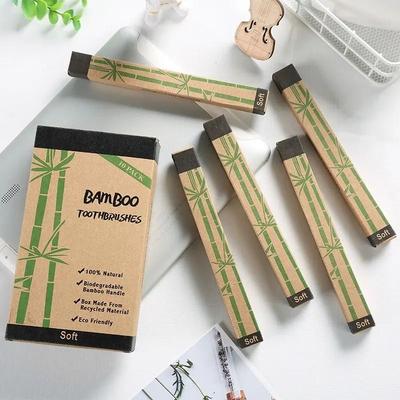
Uplift Essentials Natural Bamboo Eco Friendly Toothbrush 10 Piece Sustainable Family Pack Natural Bamboo Eco Friendly Toothbrush 10 Piece Sustainable Family PackTransition to a greener routine with this Natural Bamboo Toothbrush Set, a premium collection of bamboo products designed to reduce environmental impact without compromising on performance. Each handle is crafted from 100% sustainable bamboo,...37,97 $*Shipping: 0,00 $Secure redirect to the provider
-
Velocity Pro Gear Velocity Rogue 45 Backpack – OrangeVelocity Rogue 45 Backpack – Orange All the build quality of the Rogue 50, but in a lighter, more compact package. The Velocity Rogue 45 Backpack, in Orange, weighs in at 3.75kg, and has 29 external and internal pockets, a removable 150-lumen LED light, a quick-release magnetic harness, M10 YKK zippers, a 3.2mm waterproof base and a 14-inch laptop sleeve - essentially a serious site organisation system minus the full Rogue 50 footprint - for people who want all the functionality of the bigger bag without the bulk. The Rogue 45 doesn't skimp on quality just to be smaller - it's the Rogue 50 spec condensed into a lighter, more compact format for tradespeople who prefer a lighter load or work in cramped conditions. Yep, it still has 20 vertical tool pockets and two pouches in the main compartment, the same removable tool panel and velcro tool set hold198,00 £*Shipping: 0,00 £Secure redirect to the provider
-
Velocity Pro Gear Velocity Rogue 90 Service BagVelocity Rogue 90 Service Bag – Premium Service & Testing Backpack The Velocity Rogue 90 Service Bag is the next generation of the legendary PB Plumber 9.0—now with upgraded organisation, increased durability and a tough modern design. For trades who need to be efficient on the move the Rogue 90 combines elite tool storage with full backpack conversion. Inside dual tool panels offer structured layout for hand tools and instruments, with a removable thermoplastic pot for service essentials. Designed for heating engineers, plumbers, electricians and gas service technicians the Rogue 90 has dedicated analyser probe storage, padded tablet/laptop pocket and multiple organiser sections to keep everything tidy and within reach. Thermoformed comfort panels and removable backpack straps make i209,00 £*Shipping: 0,00 £Secure redirect to the provider



-
How do you calculate the velocity using the conservation of energy principle?
To calculate the velocity using the conservation of energy principle, you can use the equation: 1/2 * m * v^2 + mgh = E, where m is the mass of the object, v is the velocity, g is the acceleration due to gravity, h is the height, and E is the total mechanical energy. By rearranging the equation and solving for v, you can find the velocity of the object. This method is particularly useful for situations where the initial and final heights of the object are known, and the only force acting on the object is gravity. **
-
How are linear velocity, angular velocity, and frequency related?
Linear velocity, angular velocity, and frequency are all related through the equation v = ωr, where v is linear velocity, ω is angular velocity, and r is the radius of the rotating object. Angular velocity is the rate at which an object rotates around a fixed point, while linear velocity is the rate at which an object moves in a straight line. Frequency is the number of complete rotations or cycles per unit of time and is related to angular velocity by the equation f = ω/2π. Overall, these three quantities are interconnected and can be used to describe the motion of rotating objects. **
-
How do you calculate the velocity using the law of conservation of energy?
To calculate the velocity using the law of conservation of energy, you need to consider the initial and final energies of the system. The initial energy includes the potential energy and kinetic energy of the object, while the final energy includes only the kinetic energy. By equating the initial energy to the final energy, you can solve for the velocity of the object using the formula for kinetic energy (KE = 0.5 * m * v^2). **
-
What is the difference between instantaneous velocity and average velocity?
Instantaneous velocity refers to the velocity of an object at a specific moment in time, while average velocity is the total displacement of an object over a given time interval divided by the total time taken. Instantaneous velocity gives us information about the object's velocity at a particular instant, while average velocity provides an overall picture of the object's velocity over a period of time. In essence, instantaneous velocity is like looking at a snapshot of an object's motion, while average velocity is like looking at the entire video. **


How do you calculate the velocity taking into account the conservation of energy principle?
To calculate the velocity of an object while taking into account the conservation of energy principle, you can use the equation for conservation of mechanical energy. This equation states that the initial mechanical energy of the object (the sum of its kinetic and potential energy) is equal to its final mechanical energy. By setting the initial and final mechanical energies equal to each other and solving for the velocity, you can calculate the velocity of the object. This approach allows you to consider both the kinetic and potential energy of the object in the calculation of its velocity, taking into account the conservation of energy principle. **
What is instantaneous velocity?
Instantaneous velocity is the velocity of an object at a specific moment in time. It is the rate at which an object's position changes with respect to time at a particular instant. Unlike average velocity, which is calculated over a period of time, instantaneous velocity provides information about an object's speed and direction at a single point in time. **
Top-Angebote
Products related to Velocity:
-
Velocity Pro Gear Velocity Rogue 45 Backpack – Ranger GreenVelocity Rogue 45 Backpack – Ranger Green All the build quality of the Rogue 50, but in a lighter, more compact package. The Velocity Rogue 45 Backpack, in Ranger Green, weighs in at 3.75kg, and has 29 external and internal pockets, a removable 150-lumen LED light, a quick-release magnetic harness, M10 YKK zippers, a 3.2mm waterproof base and a 14-inch laptop sleeve - essentially a serious site organisation system minus the full Rogue 50 footprint - for people who want all the functionality of the bigger bag without the bulk. The Rogue 45 doesn't skimp on quality just to be smaller - it's the Rogue 50 spec condensed into a lighter, more compact format for tradespeople who prefer a lighter load or work in cramped conditions. Yep, it still has 20 vertical tool pockets and two pouches in the main compartment, the same removable tool panel and velcro t198,00 £*Shipping: 0,00 £Secure redirect to the provider
-
Velocity Pro Gear Velocity Rogue 50 Tool Bag – Ranger GreenVelocity Rogue 50 Tool Bag - Ranger Green The Velocity Rogue 50 is a no-nonsense site tool bag designed to take everything that comes its way and keep on going. 36 pockets inside and out, a built-in LED light that you can detach when needed, quick-release magnetic harness and some of the most robust zippers you're ever likely to come across - all contained in a seriously tough 900D water-resistant package that weighs a solid 6.1kg and stands up on its own. Most tool bags are all about storage. The Rogue 50 puts functionality first. The 20 tool pockets running up the sides of the main compartment keep everything you need within easy reach, the removable tool panel at the back lets you reconfigure your layout as you see fit, and the EVA storage pod up front handles fragile or smaller items with care. The magnetic pouch on the front and velcro attachmen229,00 £*Shipping: 0,00 £Secure redirect to the provider
-
Velocity Pro Gear Velocity Rogue 20XL Service Bag - Ranger GreenVelocity Rogue 20XL Service Bag – Ranger Green You've been waiting for a bigger, better upgrade to the Velocity 2.0 Service Bag - and this is it. The Rogue 20XL in Ranger Green is one serious upgrade. It packs 37 internal and external pockets - yes, that's a lot of pockets - plus three embedded magnets which are a total game-changer. Need to hold some screws or fixings? These magnets will keep them right where you need them. You wont need a separate tray or even a pot. Throw in a removable tool panel with four pockets and you can have frequently used tools right at your fingertips without having to dig through the main bag all the time. And good news, the whole bag is waterproof with a 3.2mm base and M10 YKK zippers which are rated for heavy daily use - its built to last. If you're familiar with the Velocity 2.0 Service Bag, the 20XL is pretty much167,00 £*Shipping: 0,00 £Secure redirect to the provider
-
Uplift Essentials Natural Bamboo Eco Friendly Toothbrush 10 Piece Sustainable Family Pack Natural Bamboo Eco Friendly Toothbrush 10 Piece Sustainable Family PackTransition to a greener routine with this Natural Bamboo Toothbrush Set, a premium collection of bamboo products designed to reduce environmental impact without compromising on performance. Each handle is crafted from 100% sustainable bamboo,...37,97 $*Shipping: 0,00 $Secure redirect to the provider
-
What is the difference between organic and eco-friendly products?
Organic products are made from ingredients that are grown without the use of synthetic pesticides, herbicides, or fertilizers, and are often certified by a regulatory body. Eco-friendly products, on the other hand, are designed to have minimal impact on the environment throughout their entire lifecycle, from production to disposal. While organic products focus on the natural ingredients used, eco-friendly products consider the overall environmental impact of the product. In essence, organic products focus on the ingredients, while eco-friendly products focus on the entire product lifecycle. **
-
Is organic sustainable?
Organic farming practices can be more sustainable than conventional methods in terms of reducing chemical inputs, promoting biodiversity, and improving soil health. However, there are challenges to the scalability and efficiency of organic farming, which can impact its overall sustainability. For example, organic farming typically requires more land and labor to produce the same amount of food as conventional methods, which can limit its ability to meet global food demand. Additionally, the transportation and distribution of organic products can have a higher environmental impact due to their shorter shelf life and the need for refrigeration. Overall, while organic farming has many sustainable benefits, there are also limitations to its long-term sustainability on a large scale. **
-
How do you calculate the velocity using the conservation of energy principle?
To calculate the velocity using the conservation of energy principle, you can use the equation: 1/2 * m * v^2 + mgh = E, where m is the mass of the object, v is the velocity, g is the acceleration due to gravity, h is the height, and E is the total mechanical energy. By rearranging the equation and solving for v, you can find the velocity of the object. This method is particularly useful for situations where the initial and final heights of the object are known, and the only force acting on the object is gravity. **
-
How are linear velocity, angular velocity, and frequency related?
Linear velocity, angular velocity, and frequency are all related through the equation v = ωr, where v is linear velocity, ω is angular velocity, and r is the radius of the rotating object. Angular velocity is the rate at which an object rotates around a fixed point, while linear velocity is the rate at which an object moves in a straight line. Frequency is the number of complete rotations or cycles per unit of time and is related to angular velocity by the equation f = ω/2π. Overall, these three quantities are interconnected and can be used to describe the motion of rotating objects. **
Similar search terms for Velocity
-
Velocity Pro Gear Velocity Rogue 45 Backpack – OrangeVelocity Rogue 45 Backpack – Orange All the build quality of the Rogue 50, but in a lighter, more compact package. The Velocity Rogue 45 Backpack, in Orange, weighs in at 3.75kg, and has 29 external and internal pockets, a removable 150-lumen LED light, a quick-release magnetic harness, M10 YKK zippers, a 3.2mm waterproof base and a 14-inch laptop sleeve - essentially a serious site organisation system minus the full Rogue 50 footprint - for people who want all the functionality of the bigger bag without the bulk. The Rogue 45 doesn't skimp on quality just to be smaller - it's the Rogue 50 spec condensed into a lighter, more compact format for tradespeople who prefer a lighter load or work in cramped conditions. Yep, it still has 20 vertical tool pockets and two pouches in the main compartment, the same removable tool panel and velcro tool set hold198,00 £*Shipping: 0,00 £Secure redirect to the provider
-
Velocity Pro Gear Velocity Rogue 90 Service BagVelocity Rogue 90 Service Bag – Premium Service & Testing Backpack The Velocity Rogue 90 Service Bag is the next generation of the legendary PB Plumber 9.0—now with upgraded organisation, increased durability and a tough modern design. For trades who need to be efficient on the move the Rogue 90 combines elite tool storage with full backpack conversion. Inside dual tool panels offer structured layout for hand tools and instruments, with a removable thermoplastic pot for service essentials. Designed for heating engineers, plumbers, electricians and gas service technicians the Rogue 90 has dedicated analyser probe storage, padded tablet/laptop pocket and multiple organiser sections to keep everything tidy and within reach. Thermoformed comfort panels and removable backpack straps make i209,00 £*Shipping: 0,00 £Secure redirect to the provider
-
Velocity Pro Gear Velocity 20M Test Meter BagVelocity 20M Test Meter Bag – Meter Protection for Professionals The Velocity 20M Test Meter Bag takes the proven Rogue/20XL platform and adds extra protection for trades who rely on sensitive testing equipment. With fully enclosed, zippered side pockets the 20M keeps meters, testers, probes and electrical instruments clean, safe and secure without sacrificing the space and organisation of the 20XL. Built from heavy-duty, water-resistant materials with reinforced nylon stitching, YKK M10 interlocking zippers, marine-grade rivets and a rugged waterproof polypropylene base this service bag is designed for tough, daily site use. With 37 internal and external pockets, removable tool panels, internal magnets for screws and fittings and dedicated lined meter pockets the 20M has e179,00 £*Shipping: 0,00 £Secure redirect to the provider
-
Velocity Pro Gear Velocity Rogue 45 Backpack – BlackVelocity Rogue 45 Backpack – Black All the build quality of the Rogue 50, but in a lighter, more compact package. The Velocity Rogue 45 Backpack, in Black, weighs in at 3.75kg, and has 29 external and internal pockets, a removable 150-lumen LED light, a quick-release magnetic harness, M10 YKK zippers, a 3.2mm waterproof base and a 14-inch laptop sleeve - essentially a serious site organisation system minus the full Rogue 50 footprint - for people who want all the functionality of the bigger bag without the bulk. The Rogue 45 doesn't skimp on quality just to be smaller - it's the Rogue 50 spec condensed into a lighter, more compact format for tradespeople who prefer a lighter load or work in cramped conditions. Yep, it still has 20 vertical tool pockets and two pouches in the main compartment, the same removable tool panel and velcro tool set holder198,00 £*Shipping: 0,00 £Secure redirect to the provider
-
How do you calculate the velocity using the law of conservation of energy?
To calculate the velocity using the law of conservation of energy, you need to consider the initial and final energies of the system. The initial energy includes the potential energy and kinetic energy of the object, while the final energy includes only the kinetic energy. By equating the initial energy to the final energy, you can solve for the velocity of the object using the formula for kinetic energy (KE = 0.5 * m * v^2). **
-
What is the difference between instantaneous velocity and average velocity?
Instantaneous velocity refers to the velocity of an object at a specific moment in time, while average velocity is the total displacement of an object over a given time interval divided by the total time taken. Instantaneous velocity gives us information about the object's velocity at a particular instant, while average velocity provides an overall picture of the object's velocity over a period of time. In essence, instantaneous velocity is like looking at a snapshot of an object's motion, while average velocity is like looking at the entire video. **
-
How do you calculate the velocity taking into account the conservation of energy principle?
To calculate the velocity of an object while taking into account the conservation of energy principle, you can use the equation for conservation of mechanical energy. This equation states that the initial mechanical energy of the object (the sum of its kinetic and potential energy) is equal to its final mechanical energy. By setting the initial and final mechanical energies equal to each other and solving for the velocity, you can calculate the velocity of the object. This approach allows you to consider both the kinetic and potential energy of the object in the calculation of its velocity, taking into account the conservation of energy principle. **
-
What is instantaneous velocity?
Instantaneous velocity is the velocity of an object at a specific moment in time. It is the rate at which an object's position changes with respect to time at a particular instant. Unlike average velocity, which is calculated over a period of time, instantaneous velocity provides information about an object's speed and direction at a single point in time. **
* All prices are inclusive of VAT and, if applicable, plus shipping costs. The offer information is based on the details provided by the respective shop and is updated through automated processes. Real-time updates do not occur, so deviations can occur in individual cases. ** Note: Parts of this content were created by AI.